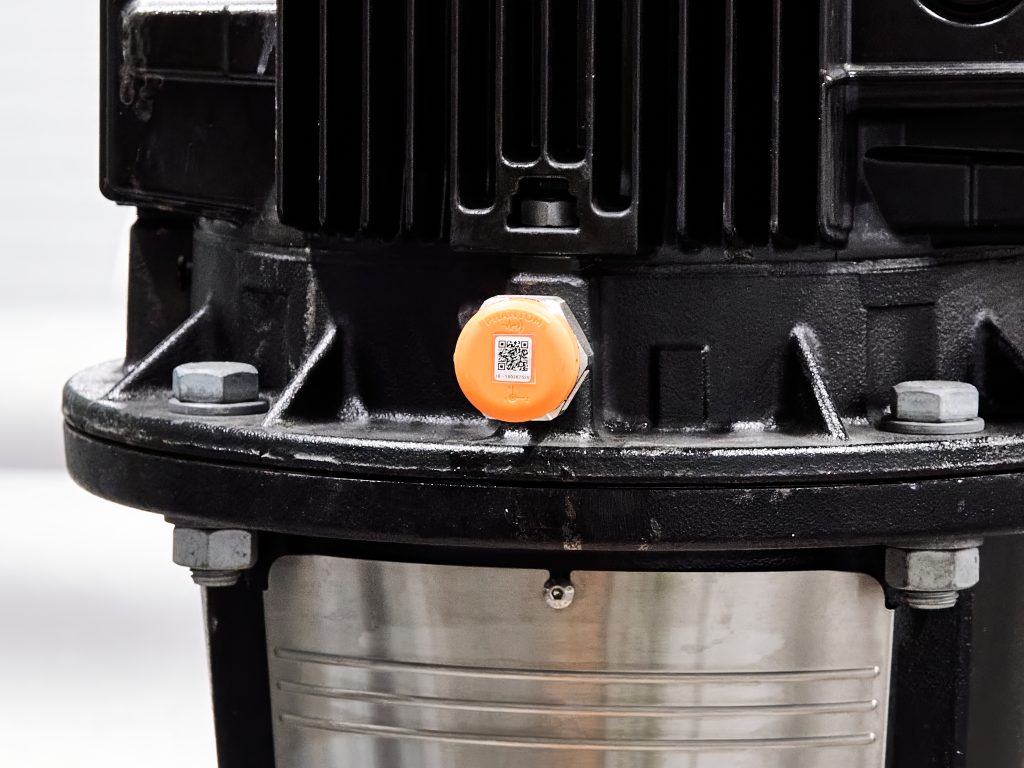
Setting thresholds is a crucial aspect of condition-based monitoring, enabling you to track your equipment’s performance and receive alerts when a specified threshold is breached.
At Otoni AI, we utilise the ISO 10816 standard to establish these thresholds. This multi-part international standard provides guidelines for evaluating the mechanical vibration of machines using measurements taken from non-rotating parts, such as bearing housings, pedestals, or casings.
The purpose and scope of this standard include:
Vibration Evaluation: Helps determine whether a machine’s vibration levels are within acceptable limits.
Non-Rotating Parts: Focuses on measurements taken from stationary components.
Machine Health: Aids in identifying potential faults and guiding maintenance decisions.
The vibration evaluation zones for machinery used in Otoni ai are classified into four categories (A, B, C, D) based on vibration severity:
| Zone | Condition | Large Machines | Small Machines|
|——|—————-|—————– |——————|
| A | Good | ≤ 2.8 mm/s | ≤ 1.8 mm/s |
| B | Satisfactory | 2.8–4.5 mm/s | 1.8–2.8 mm/s |
| C | Unsatisfactory | 4.5–7.1 mm/s | 2.8–4.5 mm/s |
| D | Unacceptable | > 7.1 mm/s | > 4.5 mm/s |
These zones help prioritise maintenance actions and assess operational risk. Within the Otoni AI system, these zones and their corresponding thresholds set the limits for alerts sent to engineers, who can then investigate any anomalies in machine performance.
This process provides real-time information about equipment condition and performance, allowing for proactive measures to prevent potential failures.